
gpt-oss-safeguard Makes Safety Policies Runtime Inputs
OpenAI's gpt-oss-safeguard release turns written safety policies into runtime classifier inputs, which is useful for teams that need adaptable Trust and Safety workflows.
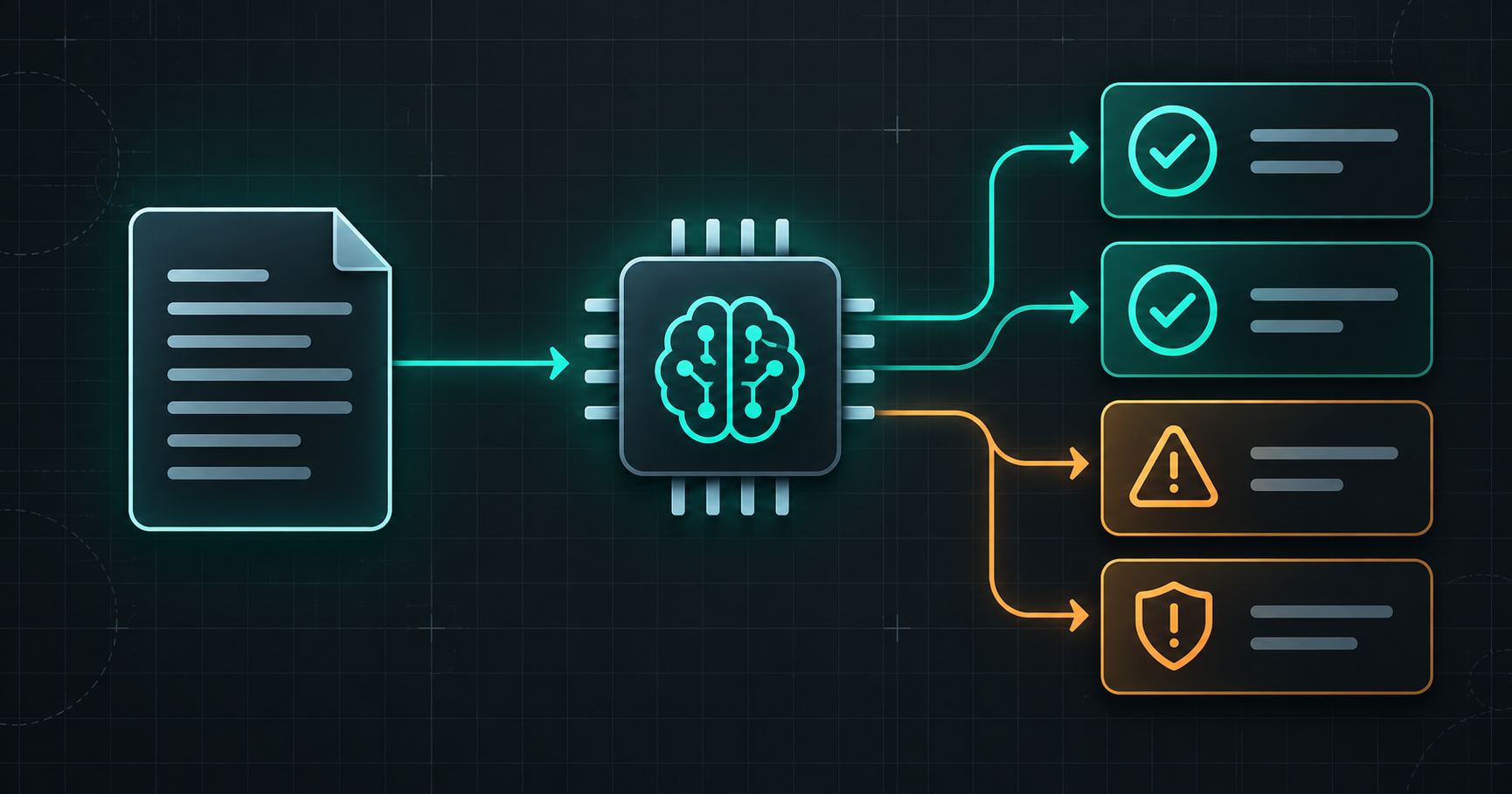
OpenAI released gpt-oss-safeguard, a pair of open-weight models trained for safety classification. The useful part is not just that another classifier exists. It is that the policy is provided at inference time, so the same model can classify content against the rules a team actually wants to enforce.
That matters for small teams building forums, AI products, review queues, or internal copilots. Most safety systems get awkward when the policy changes faster than the labeled data. A runtime policy classifier gives builders a way to test policy language, inspect reasoning, and tighten operations before committing to a custom training loop.
What Changed
OpenAI published two open-weight safety reasoning models: gpt-oss-safeguard-120b and gpt-oss-safeguard-20b. Both are post-trained from the gpt-oss models, released under Apache 2.0, and intended for classification tasks where the developer supplies a written policy and the content to evaluate.
The smaller model is still not tiny. The Hugging Face card lists gpt-oss-safeguard-20b as 21B parameters with 3.6B active parameters, and says it fits into GPUs with 16GB of VRAM. The larger model is listed as 117B parameters with 5.1B active parameters.
OpenAI also published a teen safety policy pack. Those policies are prompt-based starting points for categories such as graphic violent content, graphic sexual content, harmful body ideals and behaviors, dangerous activities, dangerous roleplay, and age-restricted goods and services. The repository includes matching validation CSVs so teams can check how policy edits affect behavior.
Why We’re Paying Attention
Traditional classifiers are usually trained around a fixed taxonomy. That can be efficient and cheap at runtime, but it makes policy iteration heavy. If the boundary changes, the team often needs new examples, new labels, retraining, and another evaluation pass.
gpt-oss-safeguard flips that workflow. The policy becomes part of the request. A team can write the rule, run content through it, inspect the output, revise the policy text, and measure the change against a validation set.
That is especially useful when the risk is contextual:
The same phrase may be fine in a safety training document,
questionable in a teen social app,
and disallowed in a product review system if it is part of fraud.
The model does not remove the need for human policy judgment. It makes the policy easier to operationalize and test.
How It Works
The model takes two pieces of input:
1. A written policy with labels, definitions, and examples.
2. The content to classify against that policy.
The output is a classification under the supplied policy, with reasoning that developers and safety practitioners can inspect. OpenAI’s technical report says the models support configurable reasoning effort and Structured Outputs. The Hugging Face card also notes that the models were trained on the harmony response format and should be used with that format.
In production, this is best treated as one layer in a larger Trust and Safety system:
User or model content
  -> cheap pre-filters and allowlists
  -> gpt-oss-safeguard policy classification
  -> product action, review queue, or monitoring event
  -> human review and validation feedback
For low-risk internal workflows, the output might only tag content for later review. For higher-risk products, it should feed a pipeline with logging, appeals, sampling, and human escalation.
A Small Useful Test
This post does not need a sample repo. The first useful experiment is a policy-quality check, not a new wrapper around model inference. The model is large enough that a real local run depends on GPU availability, and the official guide already covers serving paths through Transformers, vLLM, LM Studio, Ollama, and Colab.
A practical first pass is to pick one narrow policy and create a tiny validation table:
id,text,expected_label,notes
1,"A benign discussion that should be allowed",allow,"clear negative control"
2,"A borderline example from your actual product",review,"tests nuance"
3,"A clear violation under your written policy",block,"clear positive control"
4,"A quote from educational or safety context",allow,"tests context handling"
5,"A disguised or euphemistic violation",review,"tests policy coverage"
Then run the same table after every policy edit and track where the labels changed. The important question is not whether the model agrees with a vague idea of safety. It is whether the policy text produces repeatable decisions that your team can defend.
Cost And Operational Notes
Open weights do not mean zero operating cost. The 20B model needs serious local hardware or rented GPU time. The 120B model is a server-class deployment. If the product needs low-latency moderation on every message, a reasoning model may be too expensive for the hot path.
The stronger pattern is usually tiered:
Fast deterministic checks for obvious cases.
Small classifiers for stable categories.
gpt-oss-safeguard for nuanced, changing, or audit-heavy policies.
Human review for uncertain or high-impact decisions.
There are also safety and privacy details to keep straight:
- Do not expose raw reasoning to end users; use it for debugging and review.
- Version policy prompts the same way you version code.
- Keep evaluation sets separate from policy examples so you can detect overfitting.
- Log the policy version, model version, input class, output label, and downstream action.
- Treat teen safety policies as starting points, not as a guarantee that a product is safe for minors.
For small teams, the right first deployment is usually offline review or shadow mode. Let the model classify real traffic without taking automatic action, compare it with human decisions, then decide where it belongs in the live pipeline.
What We’d Watch Next
The open question is whether policy-as-prompt classifiers become a common operations pattern. They are slower than fixed classifiers, but they are easier to adapt when the rules are still moving.
We would watch three things: how teams evaluate policy prompt changes, whether smaller specialized models catch up for common categories, and whether safety systems start treating policy text as a deployable artifact with tests, approvals, and rollback.
The practical takeaway is straightforward: if your moderation or AI safety policy changes often, test whether a runtime policy classifier can sit between hand-written rules and a fully trained custom classifier.